AI failure modes
Watch how AI can shape a problem and the work that follows. Each figure includes questions to use when reviewing that work.
These classroom examples are proposed adaptations. The original PME essay names all seven modes; each adapted essay names the modes relevant to its argument.
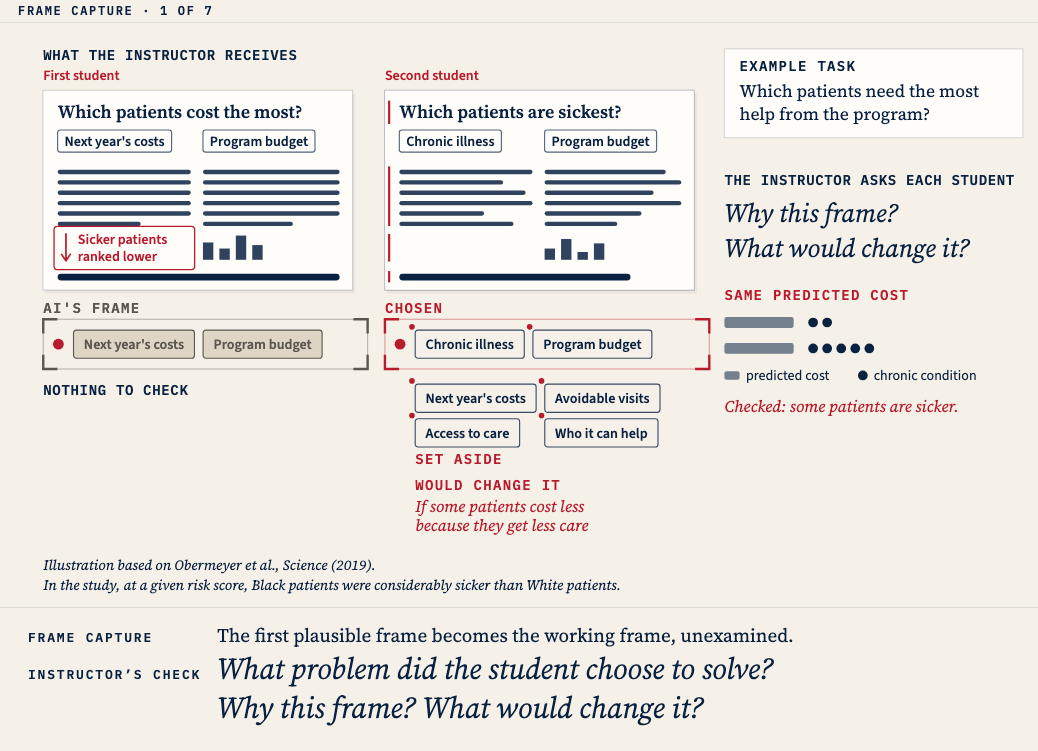
Frame capture
The first plausible frame becomes the working frame, unexamined.
What problem did the student choose to solve?
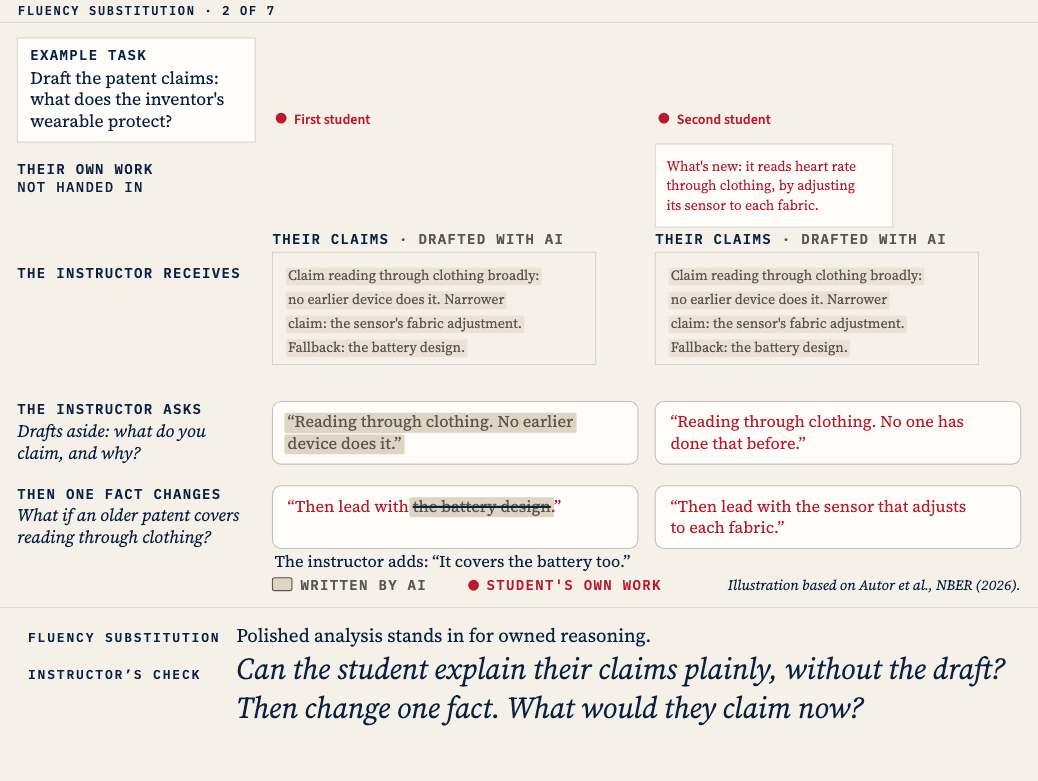
Open the figureFluency substitution
Polished analysis stands in for owned reasoning.
Can the student explain their claims plainly, without the draft?
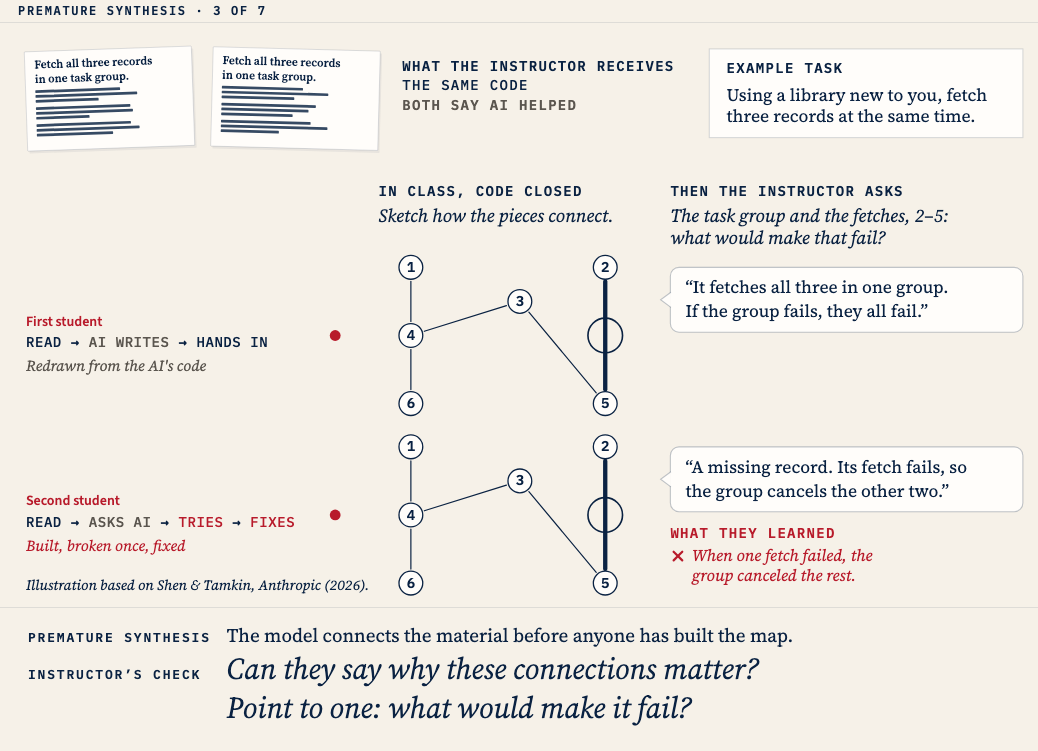
Open the figurePremature synthesis
The model connects the material before anyone has built the map.
Can they say why these connections matter?
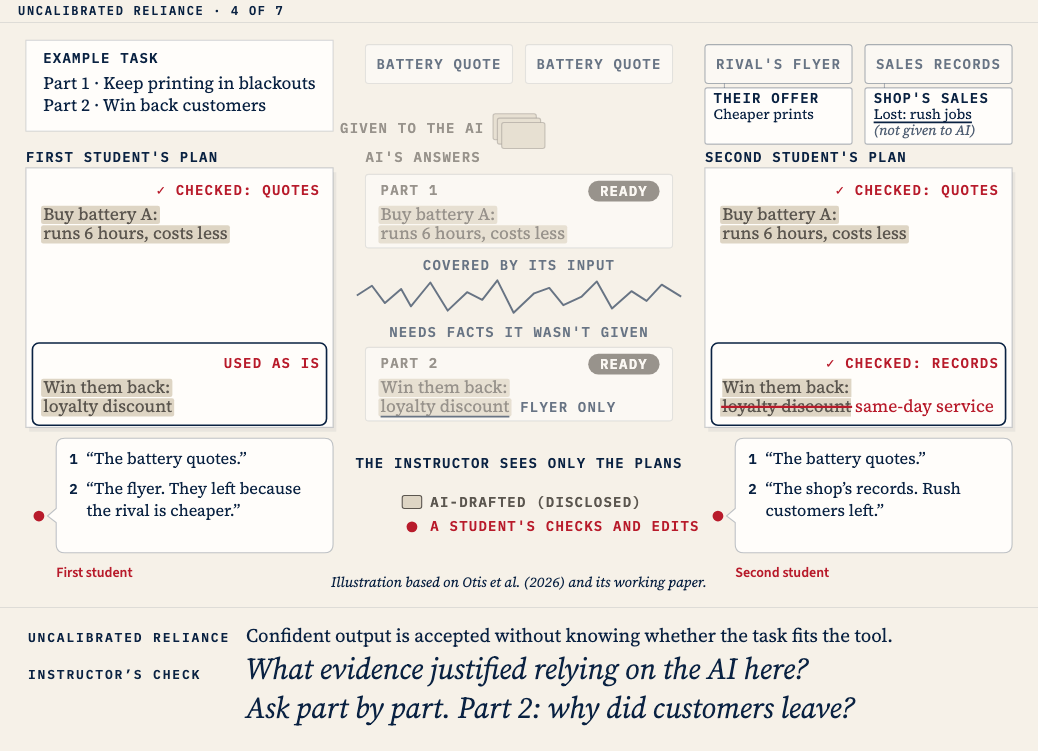
Open the figureUncalibrated reliance
Confident output is accepted without knowing whether the task fits the tool.
What evidence justified relying on the AI here?
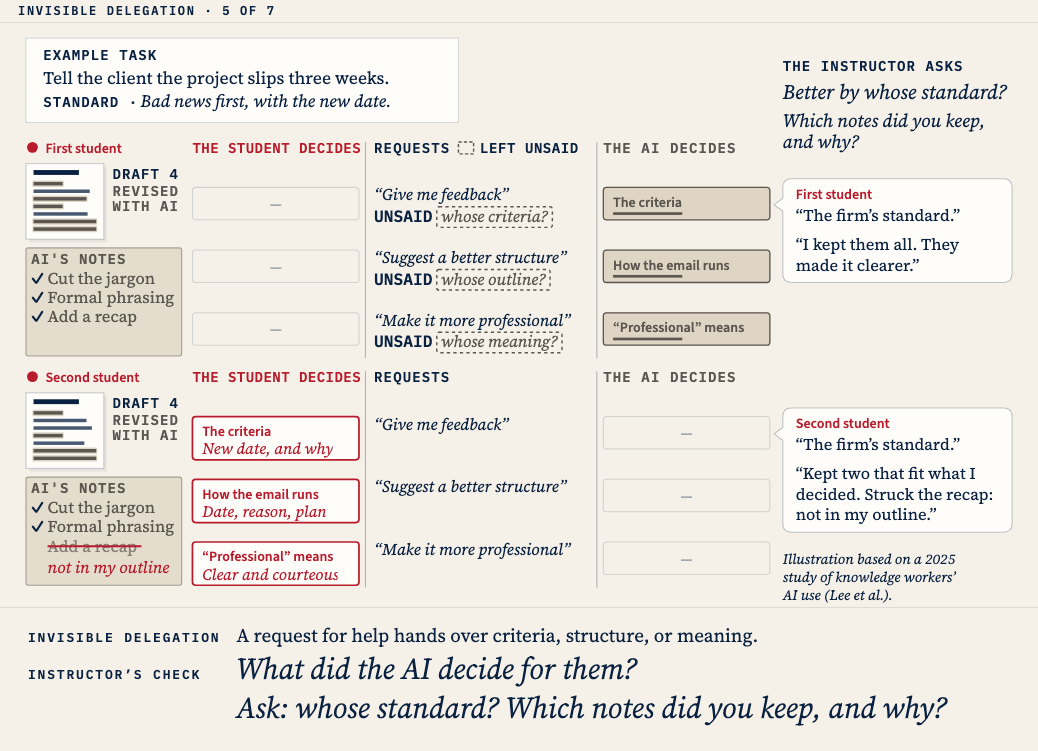
Open the figureInvisible delegation
A request for help hands over criteria, structure, or meaning.
What did the AI decide for them?
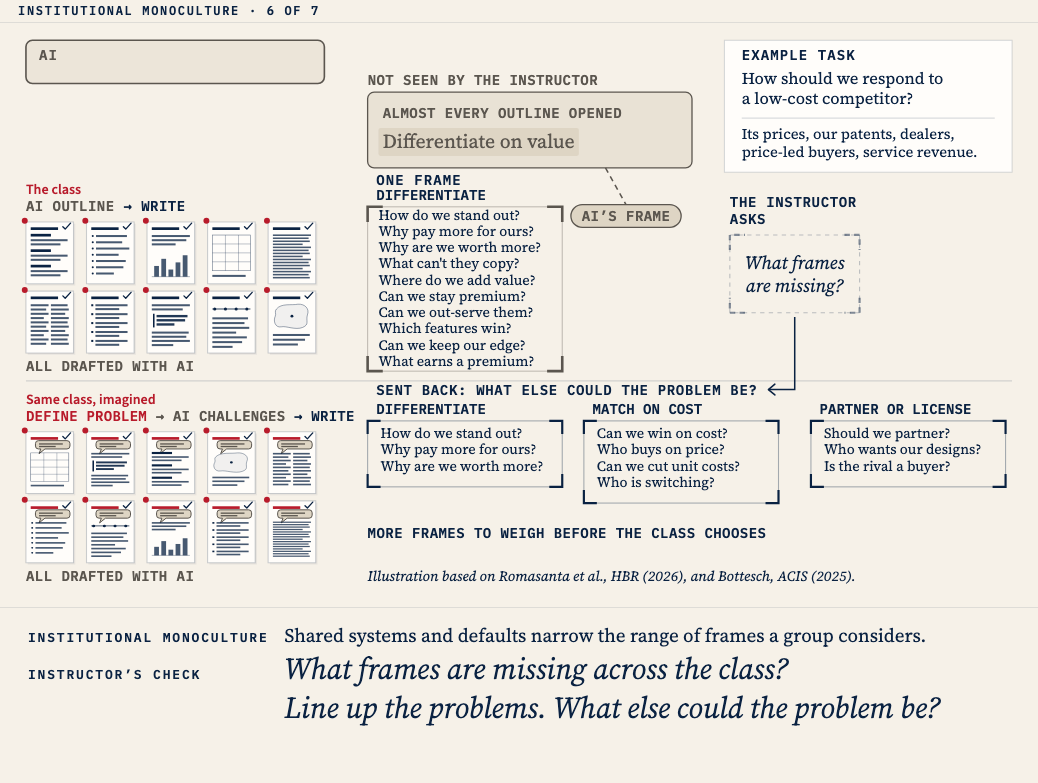
Open the figureInstitutional monoculture
Shared systems and defaults narrow the range of frames a group considers.
What frames are missing across the class?
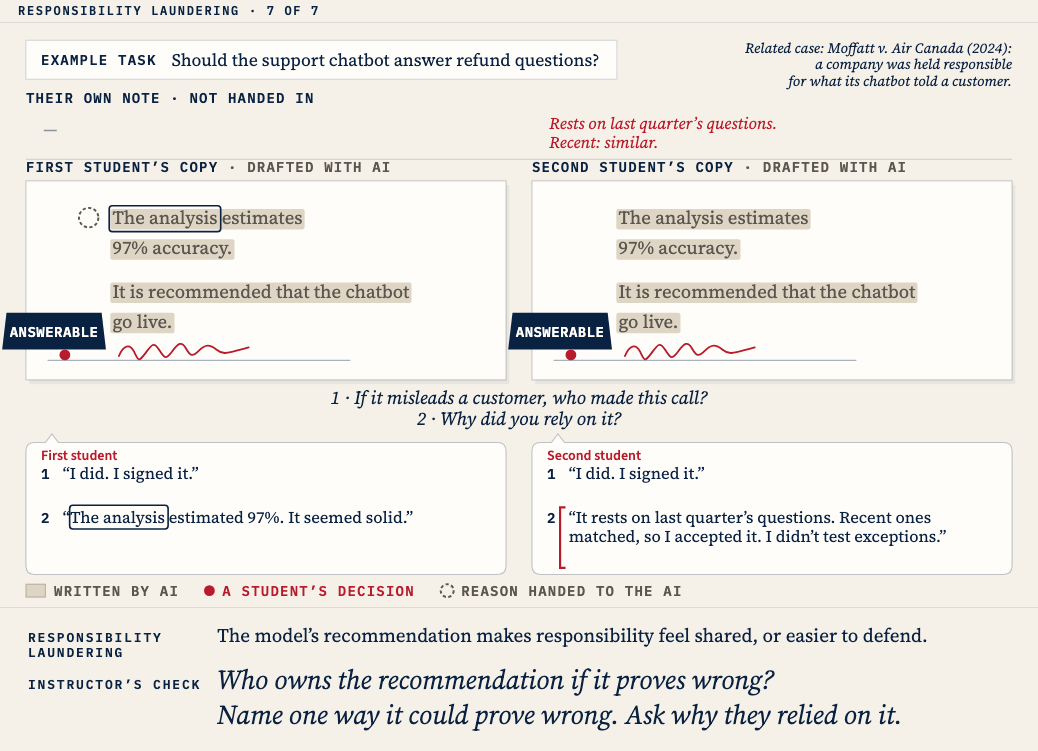
Open the figureResponsibility laundering
The model’s recommendation makes responsibility feel shared, or easier to defend.
Who owns the recommendation if it proves wrong?
Open the figure
Appropriate reliance
Make a call about where to rely on AI, then inspect the reasons.
Try the warm-up